We announce the Asian Modelica & FMI Conference 2026. It will take place at the high-tech city of Hangzhou, China from September 21-22, 2026 also famous of its stunning west lake scenery. It is organized by the Beihang University (at Hangzhou campus) and Nanjing Yuansi SimTek Co., Ltd. in cooperation with the Modelica Association. This is the first visit of the conference series in China.
About the Conference
The Modelica & FMI conference will bring together people using Modelica and/or other Modelica Association standards for modeling, simulation, and control applications, such as Modelica language designers, tool vendors and library developers. The Modelica Conference provides Modelica users with the opportunity to stay informed about the latest language, library, and tool developments, and to get in touch with people working on similar modeling problems.
In addition to paper presentations, the conference features several Modelica tutorials for beginners and advanced users, as well as industrial user presentations, vendor sessions, and an exhibition.
Important Dates
| December 12, 2025 | Call for papers |
| May 31, 2026 | Deadline for scientific paper submissions (extended) |
| Notification of acceptance for scientific papers | |
| June 30, 2026 | Deadline for submission of industrial user presentations |
| June 30, 2026 | Deadline for submission of vendor presentations |
| July 15, 2026 | Notification of acceptance for industrial user presentations |
| July 31, 2026 | Deadline for early registration |
| Submission of final papers, presentations, and one-page abstracts | |
| September 21-22, 2026 | Asian Modelica & FMI Conference 2026 |
Preliminary Program
You are welcome to study the Preliminary Program of the Asian Modelica Conference 2026 for your conference planning.
Conference App
View the full conference program, sessions, speakers, and papers.
Please note: The app is expected to stay online for an extended period, but availability cannot be guaranteed indefinitely.
Our Sponsors
Gold

Silver




Bronze






To become a sponsor of the Asian Modelica & FMI Conference 2026, please contact the conference organizers for more information.
Call for Papers
You are encouraged to submit a full paper of at least 4 pages, with a maximum of 10 pages, on the following topics:
- Modelica modeling, simulation and design tools
- Symbolic algorithms and numerical methods for model transformation and simulation
- Multi-engineering modeling and simulation with free or commercial Modelica libraries
- Applications and new tool developments for the Functional Mock-up Interface (FMI) and Layered Standards (LS)
- Applications and new tool developments for the System Structure and Parameterization (SSP) standard
- Applications and new tool developments for the FMI for embedded Systems (eFMI) standard
- System Simulation as an integrative part of Model-based Systems Engineering (MBSE)
- Machine Learning and AI in system simulation
- Automotive applications
- Applications in thermodynamic, energy systems and building physics
- Mechatronics and robotics applications
- Medicine and biology applications
- Maritime and offshore applications
- Other industrial applications, such as electric drives, power systems, aerospace, etc.
- Large-scale system modeling and simulation code generation for parallel computing architectures
- Real-time and hardware-in-the-loop applications; Code generation for embedded control systems
- Use of Artificial Intelligence (AI) methods in simulation; SimToReal for AI training purposes
- Applications of Modelica and FMI for optimization and control design
- Experimental language designs and implementations related to Modelica standards
- Modelica in other application areas (mathematical programming, databases etc.)
- Modelica for teaching and education
Prospective authors of scientific presentations are encouraged to submit a full paper (minimum 4 pages, maximum 10 pages) addressing the aforementioned topics by April 30, 2026. Each submission will undergo peer review by no fewer than 3 independent reviewers.
In line with conference tradition, the proceedings will be published by Linköping University Electronic Press (Linköping University, Sweden). For the 2026 Asian Modelica & FMI Conference, the organizing committee has collaborated with the Editorial Board of the International Journal of Modeling Simulation and Scientific Computing (IJMSSC). Selected papers from the conference proceedings will be recommended for publication in an IJMSSC Special Issue on Modelica, while outstanding submissions will be nominated for the journal’s regular issue. Both the Special Issue and Regular Issue of IJMSSC are indexed in EI.
Recommended authors are required to revise and restructure their manuscripts to comply with IJMSSC’s specific formatting guidelines and complete the journal’s subsequent peer review process. All associated publication costs shall be borne by the authors.
For industrial participants, in addition to submitting scientific papers, you may opt to present an industrial case study/presentation. For this category, only an abstract is required, with submissions due by June 30, 2026. Please note that these industrial presentations will not be included in the conference proceedings nor considered for the IJMSSC Special Issue.
The submission of your paper will be handled through the EasyChair Conference Management System. Paper submission is open on EasyChair
Tutorials
Before the Modelica Conference, several tutorials will be held on the afternoon of September 20, 2026 at the conference venue. Each tutorial will be a bit under 3 hours and will include a “hands-on experience” session (participants are expected to bring their own laptops; the presenter will provide the necessary tools). Participants can choose the tutorial during registration.
- SMArtInt+ - Hands-on AI: Generation and Integration of Neural Networks and Surrogate Models into Modelica
- FMI Beginners’ tutorial - Exporting, Simulating, and Co-Simulating FMUs
- OpenModelica Introduction and Hands-on Practice
- Hands-on agentic modeling and best practices, with Wolfram System Modeler
- EV thermal management modeling practice with ThermofluidStreams(TFS) Library and YSSIM.YSLAB
Find a more detailes description, in our Tutorial Booklet.
Call for Sponsors and Vendor Presentations
Become a sponsor of the Asian Modelica & FMI Conference 2026! Please contact the conference organizers for more information.
Sponsoring Options
We offer exhibition and sponsoring in 4 different options:
| Platinum (max 2) | Gold | Silver | Bronze | |
|---|---|---|---|---|
| Price in CNY | 150,000 CNY | 100,000 CNY | 50,000 CNY | 25,000 CNY |
| Exhibition booth | 6m x 3m | 4m x 3m | 3m x 2m | 2m x 2m |
| Speech (30min) at main hall | Yes | - | - | - |
| Vendor session (25min) | Yes | Yes | * | * |
| Workshop (120min on Sep 20) | Yes | Yes | Yes | - |
| Free Tickets | 6 | 4 | 2 | 1 |
| Company logo on Web + Print | Yes | Yes | Yes | Yes |
| Banners in banquet hall | 2 | 1 | 1 | 1 |
| VIP Speech (10 min) at banquet | Yes | - | - | - |
Vendor presentation get the opportunity to present their products. Platinum and Gold sponsors qualify for a vendor presentation. Workshop shall have a tutorial character and are placed a day before the conference. The production of banners is up to the sponsor and not included in the sponsoring deal.
Time slots for sponsoring/vendor presentations are reserved for Platinum and Gold sponsors, while Silver and Bronze sponsors may receive a slot based on availability. Presentations are reviewed by the Conference Board to ensure they align with Modelica, FMI, and related standards (including tools, libraries, IDEs, and other supporting technologies).
Sponsors eligible for a presentation slot can submit their proposals to modelica26asia@modelica.org.
Authors’ guide
Submission process
As in most previous Modelica conferences, the EasyChair Conference Management System is used. Please note, this link only works properly if you 1) Have an account on Easychair and 2) are logged into the account when you click the link. If you don’t already have an easychair account, you first have to create one here. Make sure that you use an email address for registering that remains valid until the conference. Please choose wether your submission is going to be a full, peer-reviewed paper, or an industrial user presentation. Industrial user presentations require only an abstract and a presentation, and will be reviewed by the conference board. Authors of accepted papers and user presentations will have to submit a signed Copyright License (Word document) or (PDF) to EasyChair.
Preparation of full papers
The template has been updated for the 2021 conference, so do not use older versions of the template. Note that a nearly finished draft paper is the expected minimum for the submission deadline, papers with only an abstract, or only promised results, will be rejected. Please use the LaTeX template for the creation of full papers. There is also a Word template that is based on the LaTeX template. The Word template contains some wording specific to LaTeX packages; when drafting a document in Word, please make the contents look similar to what the LaTeX templates produce. For draft paper submissions, you may also use other templates (but include an extra page at the end stating you will use the correct template for the final submission).
Please make sure that your submission has been created according to the Modelica Formatting Guidelines.
For the final submission, there will also be the possibility to submit Modelica example model files that correspond to your publication. These files will then be attached to your paper in the Modelica Association copy of the proceedings (but not the LiU e-press copy to which the DOI points).
To announce your presentation, we encourage all presenters to post on social media with a nice picture. You may use this template.
Preparation of Industrial User Presentations and corresponding One-Pagers.
There are no specific templates for industrial user presentations itself. The presentations follow the same guidelines as for full papers.
To inform all participants about your presentation, a one page abstract of your presentation shall be included in the program. To enable a uniform look, please follow this example format. The Word or Latex Template files are found in the corresponding repository.
Technical equipment for presentations
Papers must be presented during the conference in person. Papers that are not presented will be retracted. Presentations will probably be 20 minutes long with an additional 5 minutes for questions.
Industrial User Presentations instead of Poster Session
Papers that are not accepted for a full paper presentation may still qualify for an industrial user presentation, it it is industrially relevant content by end-users, but not vendors, if the content is interesting, but not qualifies for a rigorously reviewed paper. We will let authors know of that possibility at the time of the paper acceptance.
Formatting Guidelines
Guidelines for the formatting of Modelica Conference Papers
Please note the maximum acceptable length of full papers is 10 pages. It can be exceptionally extended up to 15 pages upon request to the Program Chair.
The formatting guidelines for the Modelica Conference papers are listed here.
- File format: The final paper should be sent in Adobe PDF. Please embed all fonts in your final paper to avoid problems.
- Language: The paper has to be written in English.
- Page format and margins: Please use A4-size paper. Margins are left and right 1.8 cm, top and bottom 2.5 cm Justify text at the left and right margins.
Paper layout should be 2 column. If you use the paper templates without changing margins or paper format, they should be correct.
Detailed formatting instructions are included in the paper templates. The following is just a summary.
- Page numbers and header/footer: Do not use any page numbers, headings, or footer lines, as these will automatically be added when preparing the conference proceedings. However, footers from references in the text (not footer lines) are allowed.
- Typeface: For the main text of your paper, use 10.5 pt Times New Roman, Times Roman type or the nearest equivalent font. Do not use any other fonts in your document except Courier or Courier New for verbatim code. Verbatim code in Courier font in separate paragraphs should be 9pt, whereas verbatim code snippets inserted within ordinary text paragraphs should have 9.5 pt size.
- First page: At the top margin, type the title of your paper (use 17 pt size boldface Times New Roman). Titles should not exceed three lines. Leave a space and type the author’s name, organization and address. The authors name(s) should be in 12pt font, the organization and address lines should be in 10.5 pt font; but email addresses should be in 9.5pt Courier New font.
- Abstract: Following the author’s name and address, type the abstract of your paper. Use 12 pt bold for the heading. Your abstract should be 100 to 150 words and should be an informative, self-explanatory summary of the paper.
- Keywords: After abstract, type some Keywords describing the content of your paper, using Italics characters. Try not to exceed 2 lines.
- Headings and subheadings: Use 14 pt boldface for headings, 12 pt boldface for subheadings, and 10.5 pt boldface for subsubheadings.
- Figures and tables: Figures and tables should be inserted into the the text just after they are mentioned in the text. Include a caption for each figure/table. Number the figures and tables as they appear in the text (Figure 1, Figure 2, etc). Type figure captions below the figure. Type table captions above the table. The proceedings will only be published in electronic form, so you can include color pictures; however, be aware that readers could print them using black&white laser printers, so the diagrams should also look reasonable when printed in grayscale. Use at least 10 or 11 pt font size for text in the figures (e.g. labels or legends), since it may become unreadable if the paper is resized for printing.
- References: At the end of your paper, include a list of references, using Harvard-style (author-date) citations. Make sure that every reference is cited in the text, e.g. as (Pantelides, 1988). For LaTeX, the paper class provides the options to use.
- Length of paper: The minimum requested length for papers is 4 pages. The maximum acceptable length is 10 pages. However, since we no longer provide hard copies of the proceedings, we’ll accept full papers up to 15 pages, if the authors have very good reasons to exceed the 10-page limit.
Keynotes
15 Years Functional Mock-up Interface – a Journey from FMI 1.0 to 3.0 and the Road Ahead

Christian Bertsch, Bosch Research, FMI Project Leader and Modelica Association Board Member
Over the last fifteen years, the Functional Mock-up Interface (FMI) has evolved by addressing real industrial needs for simulation interoperability. What began as a solution mainly for the automotive industry has now firmly established itself as the de-facto industrial standard for tool-independent model exchange and co-simulation across numerous domains. This keynote will trace the journey of FMI from its initial concepts in version 1.0 to the powerful ecosystem of today. The release of FMI 3.0 marks a pivotal milestone in this journey, enabling major improvements that redefine the boundaries of system simulation. This new version introduces advanced co-simulation capabilities, facilitates the development and deployment of virtual ECUs, and seamlessly integrates FMI models into complex optimization and machine learning workflows. These enhancements empower engineers to tackle new challenges in digitalization and automation with greater efficiency and fidelity. Looking to the road ahead, the FMI standard continues to expand through the development of Layered Standards. These domain-specific extensions, built on top of the core FMI framework, enable further improvements and unlock entirely new use cases for virtual engineering. This talk will provide a comprehensive look at FMI’s past, present, and future, celebrating its role as a cornerstone of modern model-based development.
Model-based Digital Engineering Practice for Automobiles
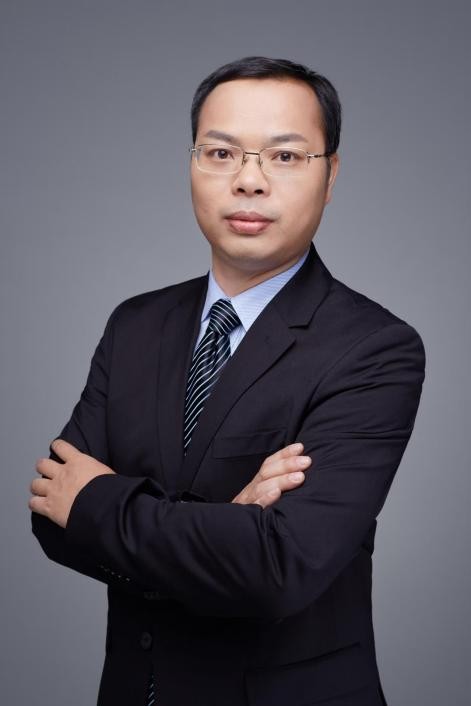
Zhong Yilin, Vice President of BYD Automotive Engineering Research Institute
Leveraging its full-industry-chain advantages, vertical integration, and massive proprietary R&D, BYD has achieved global leadership in new energy vehicle sales. To address the growing complexity of vehicle systems while sustaining this leadership, systematic application of systems engineering methods has become essential across the product lifecycle. This keynote focuses on digital engineering practices with Modelica, exploring three interrelated areas: 1) co-simulation design and validation methodologies for highly integrated vehicle systems; 2) high-fidelity and computationally efficient modeling approaches for diverse R&D scenarios; and 3) engineering implementation of toolchain integration and virtual validation. We are currently advancing Modelica-based digital engineering practices across multiple domains: developing a whole-vehicle digital engineering co-simulation platform that integrates powertrain, thermal management, and chassis control models, realizing seamless cross-system collaborative optimization of power performance, energy efficiency, and handling stability; creating digital models for HVAC thermal management systems that accurately predict cabin thermal load and system power consumption and energy flows, significantly enhancing both energy efficiency and cabin comfort; implementing digital development processes for seat systems that enable early-stage validation of control strategies, vibration-noise characteristics, and comfort attributes through model-driven design and simulation, substantially reducing physical prototype development-cycles; and pioneering AI-Modelica integration that leverages data-driven methods to accelerate model generation, parameter identification, and calibration, substantially improving the intelligence level of complex system modeling. These practices collectively validate Modelica’s critical role in complex multidisciplinary system modeling, offering a new paradigm for enhancing research and development efficiency in intelligent vehicle development.
Xu’s Modeling Method: A Foundation for Hydraulic Digital Twins and Intelligent Components
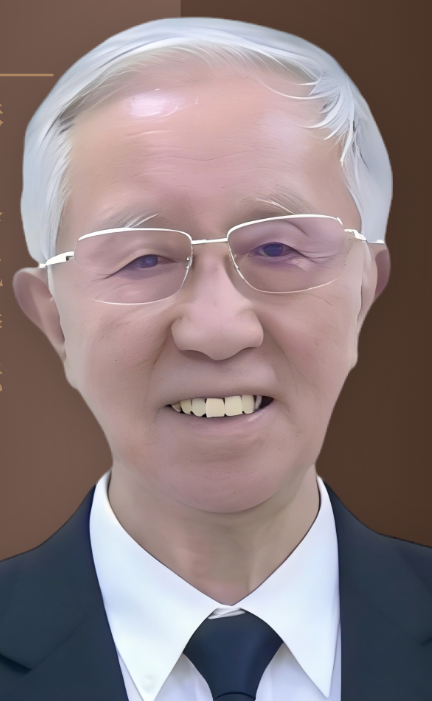
Xu Yangzeng, Professor, Expert with Special Allowance from the State Council, Editor-in-Chief of “Modern Hydraulic and Pneumatic Handbook”, Consultant of the Expert Committee of China Hydraulic, Pneumatic and Sealing Components Industry Association
The Xu’s Modeling Method, originating from foundational research for the HyPneu software at Oklahoma State University in the 1980s, provides an intuitive framework for hydraulic system modeling. Its core premise is to align the modeling process with engineers’ cognitive paradigms. A key breakthrough was its algorithmic solution to Differential-Algebraic Equation (DAE) problems, validated through the PERSIM software developed under China’s “Seventh Five-Year Plan” national project. The method enables model construction directly from hydraulic schematics by applying Kirchhoff’s law at junctions, reducing all components to two fundamental sub-models: hydraulic resistance (throttle) and hydraulic capacitance (cylinder). This yields an implicit state equation (a DAE). The Xu’s Algorithm solves this via a unified dynamic-static simulation approach, using the Newton-Raphson method iteratively to compute static states and dynamic derivatives over time steps. In the Digital Twin era, the method finds new relevance. Its implicit state equation serves as a potential mechanism model for digital twins, contingent on solving the inverse problem—a current research focus that may incorporate Artificial Intelligence. Additionally, the method offers a theoretical basis for creating “Hydraulic Intelligent Components,” guiding the design of simpler, more efficient constructions from first principles. This positions it as an advancement over the classic Hydraulic Resistance Systematic Theory. Practically, the method is being applied to develop dedicated simulation and digital twin software for a hydraulic robot system manufactured in Shenzhen, demonstrating its ongoing industrial applicability.
The Rise of Computer Intelligence and what it means for System Simulation

Dr Dirk Zimmer DLR, Institute of Robotics and Mechatronics, Oberpfaffenhofen, Germany
We are undergoing a transition period where computer intelligence is rising to dominance. It will become widely available to everyone at an unprecedented level of intelligence and also at low cost. Such transition periods are often highly chaotic and short-term predictions may hence be rather inaccurate. Based on first principles, however, we can predict what ultimately will prevail after the transition has taken place. This keynote shall provide such an analysis to answer the most relevant questions from the perspective of system simulation: Will the use of simulation rise or fall? Will there be a need for system simulation? What will be the use of Modelica in the future? Will mathematical modeling still be a thing for humans and for computers? The keynote will also explain why it uses the term computer intelligence rather than artificial intelligence.
Reflections on AI Safety and R&D Tools for Intelligent Vehicles
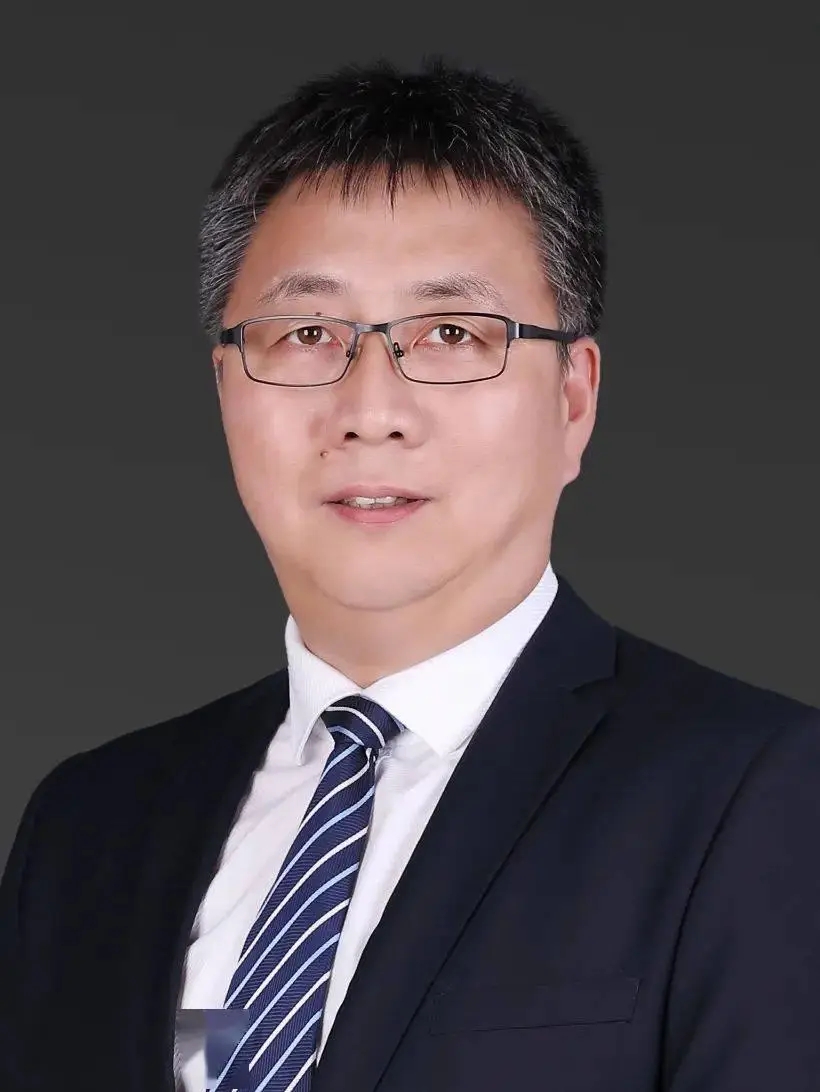
Prof. Shichun Yang Professor and Secretary of the Party Committee of the School of Transportation Science and Engineering, Beihang University, China
The report focuses on AI safety and R&D toolchains for intelligent vehicles. Drawing on the team’s extensive research in the system safety of connected and autonomous vehicles (CAVs) and autonomous driving control, it analyzes failure risks in AI perception and decision-making algorithms, as well as functional safety and data security challenges. It further elaborates on a comprehensive safety protection framework tailored for full-scenario autonomous driving. Addressing key industry pain points, the report introduces an end-to-end R&D toolchain for intelligent driving, covering simulation testing and electronic control development platforms, while demonstrating their practical applications in algorithm verification and safety assessment. Finally, by integrating theoretical insights with engineering practice, it explores iterative pathways for advancing AI safety technologies and outlines future directions for domestically developed tools, offering actionable strategies to drive technological upgrades and real-world deployment across the industry.
Conference Venue
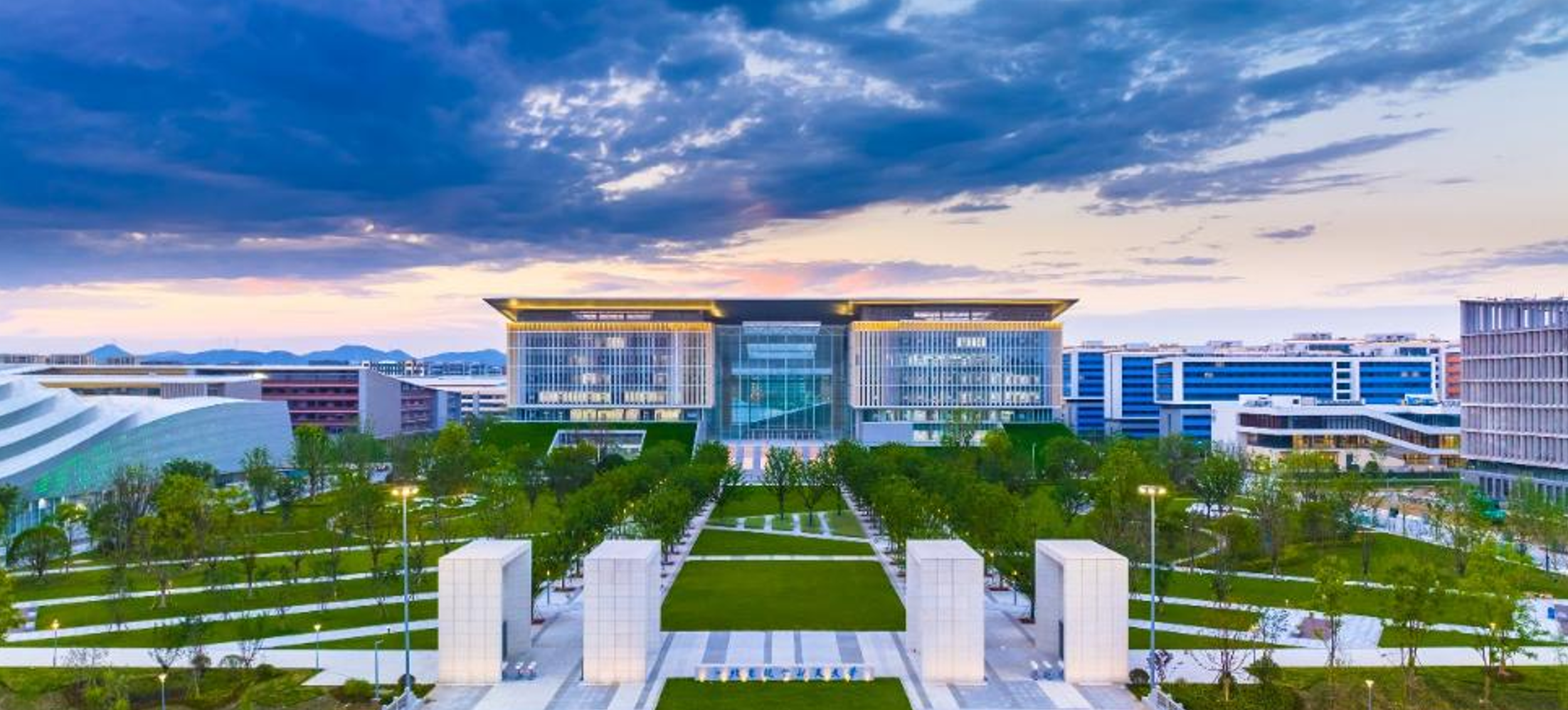
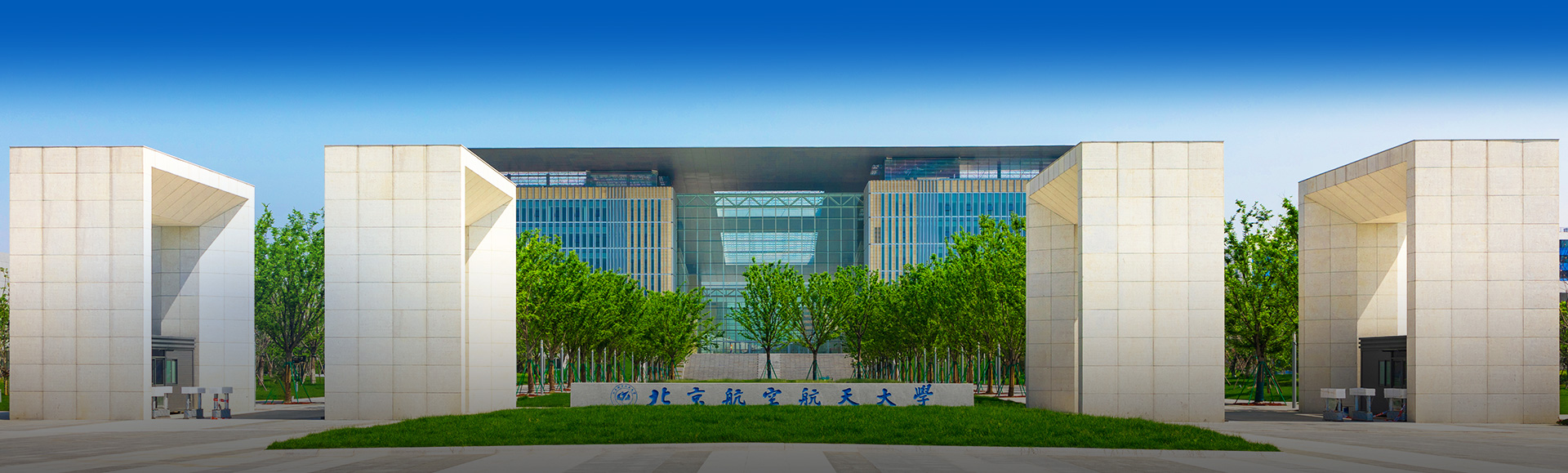
The conference will take place in the main building of the Hangzhou Campus, Beihang University
- 166 Shuanghongqiao ST, Pingyao, Yuhang District, Hangzhou, China
The venue offers space for 4 parallel technical tracks and also a plenary hall for the shared sessions.
The program will be scheduled so that both Modelica and FMI interested have a full program to enjoy. Switching between sessions is not only possible but also encouraged.
Accommodation
We recommend to book your room in the Wyndham Garden Hotel Hangzhou Yuhang
- 2699 Yuhangtang Rd, Hangzhou, 311100, Zhejiang, China (Tel: +86 571 8833 5888)
A welcome reception will be held on the evening of September 20. The conference banquet will follow on September 21 at the hotel. Shuttle service from the main hotel to the venue will be provided.
Accommodation Notes:
International Participants: Please select “YES" for “Do you need accommodation?” during registration. The local organizing committee will assist in reserving your room in advance including check-in and check-out dates confirmation by email after your registration. Payment is to be settled in person upon check-in.The hotel does not accept the booking via website or international call.
Domestic Participants: We strongly recommend booking directly via the hotel website or by calling +86 571 8833 5888 to secure your preferred rate and room type.
Besides the main hotel of Wyndham Garden Hotel Hangzhou Yuhang, there are many other hotels near Hangzhou West Railway Station and in the downtown of Hangzhou.
Travel
Transportation directly to Hangzhou:
- Flight: Hangzhou Xiaoshan International Airport (HGH), 57 Km
- Train: Hangzhou West Railway Station, 4.4Km
Most common International Travel:
- Nearest large Airport for many international guests is Shanghai Pudong International Airport (PVG).
- From there, a transfer train will bring you to Shanghai Hongqiao International Airport (SHA). Travel time (est. 40min, not including time at the airport)
- From (SHA) a high-speed train will bring you to Hangzhou West Railway Station (Travel time est. 80min)
The main hotel is near Hangzhou West Railway Station. The most convenient public transportation from downtown Hangzhou to Hangzhou West Railway Station is the metro/subway, as the station is directly served by Metro Lines 3 and 19.
- Metro
- Line 3: Runs northeast-southwest through the city, passing through areas like Dingqiao, Daguan, Chaowang Road, Huanglong Sports Center, and Xixi Wetland South
- Line 19 (Airport Express): The fastest option, connecting Hangzhou East Railway Station, Hangzhou West Railway Station, and Xiaoshan International Airport
- From Hangzhou East Station to West Station: approximately 25-30 minutes
- From Xiaoshan Airport to West Station: approximately 50 minutes
- Bus
- Multiple bus routes serve the station, including Routes 382, 467, and 592
- Suitable for areas not directly covered by the metro, but generally slower than the subway
- Taxi/Ride-hailing
- From the city center (e.g., Wulin Square): approximately 30-40 minutes, costing around ¥40-60 depending on traffic conditions
Technical Tour
Following the conclusion of the conference on the afternoon of September 22, the local organizer will host a technical site visit to DEEP Robotics, a global leader in quadruped robotics and a pioneer in embodied AI innovation and real-world deployment. Details on how to register for this technical tour will be added to the registration platform shortly.
Registration
Registration is now open at Bageventfrog. Please register soon to make planning easy for us. Early Bird tickets will be available until July 31. The conference registration is offered at the following conditions.
| Registration | Valid | incl. Dinner | Early-Price | Price |
|---|---|---|---|---|
| Standard | Mon-Tue | yes | 1875 CNY | 2500 CNY |
| Student | Mon-Tue | yes | 750 CNY | 1000 CNY |
| Conference Dinner | Dinner | yes | 225 CNY | 300 CNY |
Organization and Contact
The conference is organized by organized by the Beihang University and Nanjing Yuansi SimTek Co., Ltd. in cooperation with the Modelica Association.
For general questions, please contact modelica26asia@modelica.org.
Organizers


Supporters

Conference Board
- Prof. Shichun Yang, Beihang University, Conference Co-Chair
- Dr. Rui Gao, Nanjing Yuansi SimTek., Co., Ltd., Conference Co-Chair
- Dr. Dirk Zimmer, German Aerospace Center (DLR), Germany, Conference Co-Chair
- Prof. Martin Sjolund, Linköping University, Sweden, Editorial Chair
- Prof. Haiying Lin, Beihang University, Local Arrangement Co-Chair
- Dr. Jian Wang, Beihang University, Local Arrangement Co-Chair
- Prof. Yanfang Liu, Beihang University, Program Chair
- Prof. WeiLin Li, Northwestern Polytechnical University, Publicity Co-Chair
- Dr. OU Haiying, China SAE Automobile Model Digital Engineering Branch, Publicity Co-Chair
- Dr. Hong Lü, State Key Laboratory of Nuclear Power Safety Technology and Equipment, Publicity Co-Chair
Conference Advisory Board
- Prof. Lin Zhang, Beihang University, China
- Dipl.-Math. Christian Bertsch, Robert Bosch GmbH, Germany
- Dr. Yutaka Hirano, Hirano research Laboratory, Japan
- Dr. Dai Araki, Toshiba Digital Solution, Japan
- Dr. Daeoh Kang, iVH, Korea
- Prof. Tielong Shen, Dalian Univ. of Technology & Emeritus Professor (Sophia Univ.)